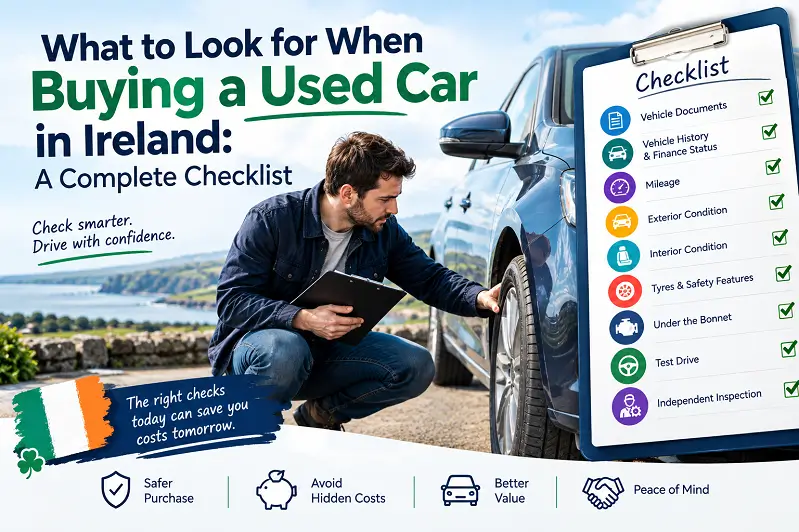
Buying a used car can be a way to get the vehicle you need without paying the price of a new one. A good-looking used car is not necessarily a good buy. Hidden mechanical problems, history, outstanding finance, or inaccurate mileage can turn an affordable used car purchase into an expensive mistake.
If you are wondering what to look for when buying a used car in Ireland, start with the basics: check the used car’s history, mileage, documents, bodywork, tyres, interior, and safety features. You should also take the used car for a test drive and consider having an experienced mechanic inspect the used car before you commit.
If you are planning to use car loans in Ireland to finance the purchase, these checks become more important. You will still have repayments to make if the used car develops a fault, so taking time to assess the used car before buying can help you make a more informed decision.
Before buying a used car in Ireland, check the used car’s history, mileage, ownership and finance status, service records, NCT information, bodywork, tyres, interior and safety features. Take the used car for a test drive. If you are not confident assessing the used car yourself, arrange an independent inspection with a mechanic.
A used car may look clean. Well maintained when you first see it, but a quick visual inspection cannot tell you everything about the used car’s past or mechanical condition.
This is particularly important when buying a used car privately. When you purchase a used car from an individual, you do not have the same consumer protection that usually applies when buying from a business. That means you should carry out your checks before agreeing to the purchase.
If you are buying a used car from a dealer, you still need to inspect the used car. Consumer protection does not remove the need to check that the used car suits your needs. Is in the condition you expect.
If you are not confident assessing a car yourself, consider taking an experienced mechanic with you or arranging an independent pre‑purchase inspection.
| What to check | What to look for | Why it matters |
| Vehicle history | Previous damage, ownership, mileage, and finance history | Helps uncover problems that may not be visible |
| Documents | Registration details, service history and NCT information | Confirms important details about the vehicle |
| Mileage | Odometer reading compared with NCT and service records | Can highlight possible mileage inconsistencies |
| Exterior | Dents, scratches, rust, uneven panels and paint differences | May reveal previous damage or repairs |
| Interior | Seats, dashboard, controls, windows and locks | Shows general condition and signs of excessive wear |
| Tyres | Tread, uneven wear and visible damage | Helps identify safety or maintenance concerns |
| Under the bonnet | Oil or coolant leaks, battery corrosion and damaged belts | May reveal signs of poor maintenance |
| Safety features | Lights, indicators, mirrors, seatbelts and warning lights | Helps you check basic safety functions |
| Test drive | Brakes, steering, gearbox, acceleration, vibration and unusual noises | Can reveal problems that a visual inspection may miss |
| Independent inspection | Professional mechanical assessment | Provides an additional check before you commit |
| Finance status | Outstanding finance attached to the vehicle | Helps reduce the risk of buying a vehicle with unresolved finance |
Start by checking the paperwork before you discuss the payment.
Ask to see the Vehicle Registration Certificate and make sure the details match the used car you are viewing. Check details such as the registration information, engine size, fuel type, colour, and date of registration.
You should also review the service history and NCT information. If the seller cannot provide documents or the information does not match the used car, stop and investigate before going any further.
If the used car is imported, ask questions about its history and original registration details. Imported used cars may have a history from cars that were first registered in Ireland, so additional checks can be useful.
A used car history check can reveal information that may not be obvious when you inspect the car yourself.
Depending on the service used, a used car history check may help you identify damage, recorded mileage, insurance claims, ownership information, outstanding finance, or whether the used car has previously been used for purposes such as taxi work.
Ask the seller directly whether the car has ever been in an accident or had bodywork or mechanical repairs.
Importantly, check whether there is outstanding finance on the car.
If a vehicle is still under an existing finance agreement, the person selling the car may not have ownership rights. Buying the car without checking its finance status could create problems later.
Do not inspect a used car from a distance. Walk around the car and look closely at the bodywork.
Check for:
Differences in paint colour or uneven panels do not automatically mean the car has been in an accident, but they are worth investigating.
Try to view the car in daylight. Poor lighting can make scratches, dents and paint differences harder to notice.
The interior can give you clues about how the car has been used and maintained.
Check the condition of the seats, carpets, dashboard, steering wheel, and door panels. Excessive wear may be worth comparing with the mileage shown on the odometer.
Make sure the doors open and close properly. Test the windows, central locking, heating, air conditioning, infotainment system, and other features included with the car.
Sit in the driver's seat. Make sure you are comfortable. Check that the driving position, mirrors, and controls can be adjusted properly before taking the car on the road.
Mileage is a part of assessing a used car, but it should never be considered on its own.
Compare the odometer reading with previous NCT records, service records, and other available vehicle history information. If the numbers do not make sense, ask the seller for an explanation.
The NCT record can provide mileage information, so check whether the recorded figures follow a reasonable pattern.
A low-mileage car is not automatically a good purchase. A car can have low mileage and still have poor maintenance, mechanical problems, or significant wear.
Look at the picture rather than focusing on one number.
Safety checks should be part of every used car inspection.
Check that:
Look closely at the tyres for wear. This can sometimes point to issues that go beyond the tyres themselves, such as alignment or suspension problems.
If a warning light remains on after starting the engine, ask the seller about it. Consider having the car professionally inspected.
You do not need to be a mechanic to perform a visual check under the bonnet.
Look for oil or coolant leaks, damaged belts, corrosion around the battery and other signs of poor maintenance.
Check levels where appropriate and look for anything that appears unusual.
However, do not assume that everything is fine simply because there are no leaks. If you are unsure about the engine or mechanical condition, a professional inspection is an option, rather than trying to diagnose problems yourself.
A test drive is one of the useful checks you can make before buying a used car.
Do not judge the car by how it feels when parked.
During the drive, pay attention to the engine, brakes, steering, clutch, gearbox, and suspension.
Listen for sounds and check whether:
Turn off the radio and other distractions so you can listen to the car properly.
If you want to be sure, I suggest you drive the car at different speeds and on different types of roads. When you drive a car on a street, the car feels fine, but when you drive the car faster, the car behaves differently.
If you are unsure about a car's condition, I recommend that an independent inspection can be a worthwhile expense.
A mechanic or a qualified automotive professional may find problems that're hard for an ordinary buyer to spot during a quick viewing.
This can be especially useful when buying a car privately because you generally have fewer consumer protections than you do when buying from a business.
The cost of an inspection may seem like an expense, but it could help you avoid buying a car that needs significant repairs.
You do not necessarily need to walk away just because you notice one minor issue. The important thing is to understand what the issue means and to factor any repair costs into your decision.
The purchase price is one part of the cost of owning a car.
If you are considering car loans in Ireland, do not look at the monthly repayment. Compare the APR, the repayment period, the amount repayable, and any applicable fees. Depending on your circumstances, you may also want to compare personal loans in Ireland as another way of financing a used car.
A longer repayment term may reduce the payment, but it can also mean paying interest for a longer period. Work out the cost before deciding whether the finance fits your budget.
Using finance can make a used-car purchase manageable by spreading the cost over an agreed period. However, the finance does not make the car itself more reliable.
Before applying for a loan, decide how much you actually need to borrow and whether the repayments remain affordable alongside your regular expenses.
Compare different car finance options in Ireland carefully and look at the total cost of borrowing, not just the advertised rate or monthly payment.
If you already have some savings, you can also consider whether combining your savings with finance would reduce the amount you need to borrow.
Your rights can depend on whether you buy from a dealer or a private seller.
When you buy a used car from a business, consumer protection rules generally apply. The car should meet the legal requirements and match what was agreed when you bought it.
Buying a car privately is different. Consumer law does not give you the level of protection in a transaction between two private individuals.
This is one reason why checking a car's history, documents, ownership, and condition is particularly important when buying a car privately.
Also be careful when dealing with someone who claims to be a seller but may actually be selling cars as a business. Make sure you know who you are buying from before making a payment.
Do I get a cooling-off period when buying a used car?
It depends on how and from whom you buy the vehicle.
Different rules can apply to distance purchases. When you buy goods online, by phone or through certain other distance-selling arrangements, a 14-day cooling-off period generally applies, subject to the relevant rules and exceptions.
Can I get my money back if a used car develops a fault?
If you buy a used car from a dealer or another business and the used car develops a fault, you may have remedies under consumer law. Depending on the circumstances, the remedy could be a repair, a replacement, a price reduction or a refund.
The situation is different when buying a used car privately because you do not have consumer protection.
Does an NCT certificate guarantee that a used car is safe?
No. An NCT confirms that the used car met the required testing standards at the time of the test. An NCT does not guarantee the car's overall condition, reliability, or future performance.
You should still inspect the car, review the used car's history, and take the used car for a test drive before buying.
What should I check before buying a used car in Ireland?
Check the used car's history, mileage, ownership, finance status, service records, and NCT information. You should also inspect the car's bodywork, tyres, interior, and safety features, take the used car for a test drive, and consider an independent mechanical inspection.
Should I buy a used car from a dealer or private seller?
Both options can have advantages. The level of consumer protection for a used car is different.
When buying a used car from a dealer or business, consumer rights generally apply. When buying a used car from an individual, you have fewer consumer protections so thorough checks are particularly important.
How can I check the mileage of a used car in Ireland?
Compare the odometer reading of the used car with previous NCT records, service records and available vehicle history information. If there is an inconsistency, ask questions and investigate before buying.
Should I get a mechanic to inspect a used car?
If you are not confident assessing the car's mechanical condition, an independent mechanic's inspection can be a sensible step. An independent mechanic may identify faults that're not obvious during a short viewing or test drive.
Knowing what to look for when buying a used car in Ireland can help you avoid making a rushed decision.
Start with the used car's history and paperwork, then check the used car's mileage, bodywork, interior, tyres and safety features. Take the used car for a test drive and investigate anything that does not look or feel right.
If you are buying a used car privately or have doubts about the used car's condition, consider getting an independent inspection before you pay.
If you plan to finance the used car, look beyond the monthly repayment. Compare the APR, loan term, and total amount repayable. Make sure the full cost of owning the used car fits comfortably within your budget.
