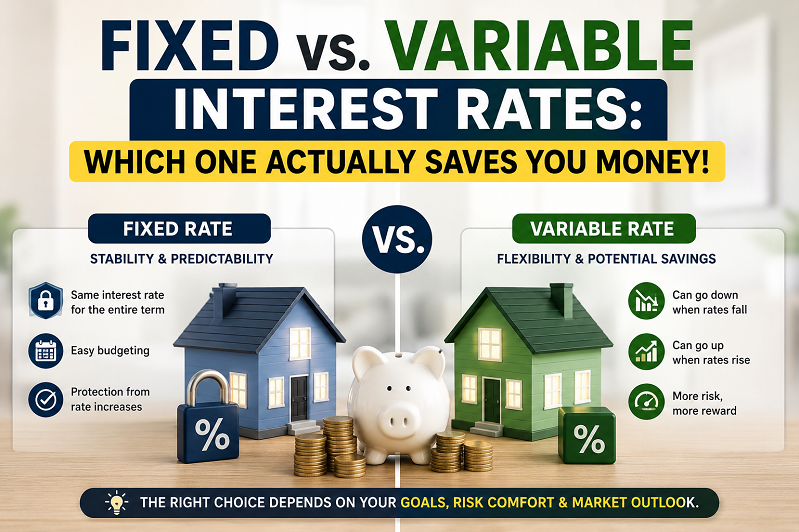
Neither. Or both. It depends on when you borrow and what happens after. That sounds like a dodge, so let me explain. A fixed rate saves you money if market rates go up after you sign. A variable rate saves you money if they drop or just sit still. Nobody, and I mean nobody, can tell you with certainty which way rates will move over the next three or five years. Economists get this wrong constantly.
So the smarter question is not "which rate is cheaper" but "which rate suits my income, my nerves, and the length of my loan". Answer that honestly, and the decision mostly makes itself.
I have seen too many people agree to loan terms they only half understood. That half they skipped? It can cost hundreds of euros. Sometimes thousands. So let us get the basics straight first.
A fixed rate locks your interest for an agreed stretch of time. The repayment you make in month one is the repayment you make in month thirty-six.
What you get:
What you give up:
I tend to describe a fixed rate as paying for peace of mind. You hand over a small premium, and in return you never have to check a rate announcement again.
A variable rate floats. Your lender can move it up or down, generally following central lending rate changes.
The upside:
The catch:
Spend an hour comparing the best personal loans in Ireland currently offers, and you will spot the pattern yourself. Variable products look cheaper in the adverts. Fixed products cost a fraction more but take all the guesswork off the table, which brings us to the money question.
Savings depend on circumstances. Not opinions, not predictions. Circumstances. Here are the ones that matter.
Go fixed when rates are low, but the general noise suggests they are heading up. Go fixed when your budget is stretched, and a surprise jump of forty euros a month would genuinely hurt. Go fixed on longer terms, because a five-year loan gives rates plenty of time to move against you.
And go fixed if you are the sort of person who checks their banking app at 2 am. Certainty has a value that never shows up in a comparison table.
One more thing worth saying. Borrowers on fixed terms panic less. Fewer rushed decisions, fewer missed payments, fewer frantic refinancing applications. That calm is a saving in itself.
Variables make sense in almost all the mirror situations:
Short-term borrowers do particularly well here. If the loan is gone in eighteen months, even a mid-term rate rise barely dents your total interest bill. The maths simply does not have time to turn ugly.
Your first choice is not permanent. This surprises people.
Took a fixed loan two years ago and watched rates fall since? Looking into a refinance loan in Ireland, lenders now promote it, which could shift you onto better pricing and possibly a shorter payoff date while you are at it. It works in reverse too. A nervous variable borrower can refinance into a fixed product and lock things down before the next rise lands.
Just run the numbers first:
The rule is simple. Refinancing saves money only when the full cost of the new loan, every fee included, lands below the cost of staying where you are; if it does not, stay put.
Work through these five checks. In my experience, the answer usually shows itself by check number two.
Fixed buys certainty. Variable buys flexibility plus a decent shot at paying less. The winner is whichever matches your life, not whichever looks prettier in an advert.
Tight budget, long term, low tolerance for surprises? Fix it and get on with your life. Breathing room in the budget and a short term? A variable might quietly leave a tidy sum in your pocket. And if hindsight says you picked wrong, refinancing exists for exactly that reason.
Borrow with your eyes open. Read every clause twice. Then let the numbers, not the marketing department, have the final word.
