Preparing a loan application can feel like a nightmare when your credit scores are not perfect. This is because of fear of rejection, as traditionally lenders do not accept poor credit. Since you are already aware of the significance of credit scores, you must improve them before applying for loans.
This way, you can lower the chances of being rejected for loans. There are other benefits of upgrading your credit history, like:
Although options like loans for bad credit in Ireland have been designed for borrowers like you, approval is not guaranteed. A lender cannot guarantee 100% approval. However, you can strengthen your chances of getting loan approval by improving your credit score in practical ways.
Your credit scores are not just a numeric representation of financial behavior, but they hint to the lender about the likelihood of repaying loans on time. However, it is not possible to ascertain repayment chances accurately. This factor is assessed alongside other aspects like employment, affordability, debt-to-income ratio, etc.
Here are a few steps you can take to upgrade credit scores.
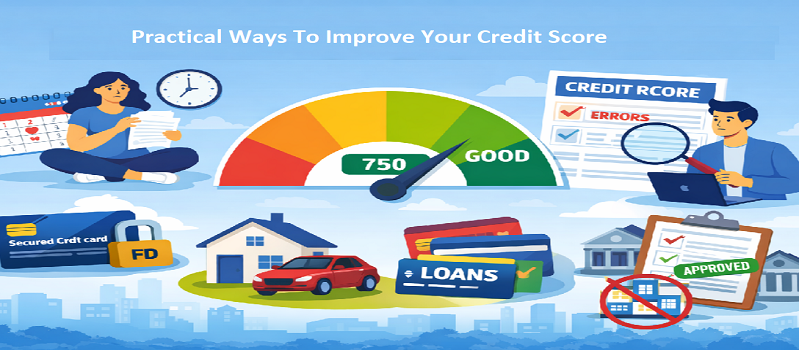
This is a mandatory step, as it can tell a lot about errors or inaccuracies in your credit report. They cannot be identified until you analyze your credit report carefully. You must review your credit file from time to time.
If you have come across inaccurate information in your credit file, address it immediately. They might be misguiding the lender, or your application might be getting rejected because of errors. You can report them immediately.
Now, do not think reviewing your credit scores once will be enough. In fact, it should be an ongoing process. This helps in correcting the errors before it is too late. Moreover, regular checking will help in identifying the potential areas of improvement before sending out a loan request.
There is no alternative to paying bills on time. This is because the impact it has can never be obtained in other ways. Late payments have a bad impact on your credit scores, and they stay in your credit report for several years.
If needed, you can choose the direct debit option so that payments are released on time. You can even opt for setting regular calendar reminders. Bills paid on time portray the responsible side of your financial behavior.
You should not be using the accessible credit limit. It should be lower than 30%, as this will help in maintaining good credit scores. Having lower levels will work in your favour.
If this ratio is high in your case, you must work on lowering it. Pay down as much as possible of the existing debts.
Do not close older credit accounts in the name of improving credit scores. This step will definitely backfire, as you will give up the lengthy credit history with the closure of that account.
Check if the older account has any annual fee or not. Suppose this has been managed responsibly and has a low balance. Help your credit scores by keeping it open, provided it is manageable.
Getting a personal loan with bad credit in Ireland does not mean you have to accept unreasonable rates. You must work on improving your credit scores by implementing the given strategies. This will help in strengthening the odds of loan approval.
Moreover, you can expect to get loans at affordable rates. This is because upgraded credit scores lower the lending risk. As a result, the lender does not feel the need to charge high rates, meant for balancing the risk involved in the lending process.
The length of tenure it may take to improve credit scores may vary depending on your financial circumstances. Some improvements can reflect within weeks after your efforts. For example, credit card balances getting reduced, errors in your credit file getting corrected can happen within this timeframe.
No, this is like a soft eligibility check, which does not cause any harm to your credit scores. You must keep your credit scores by collecting samples issued by different credit reference agencies. This will help you take necessary actions to improve your credit scores.
This is one of the crucial aspects making up your credit scores. According to various financial experts, ideally, your credit utilization ratio should be below 30% of the available credit. It would be better for you to keep the ratio below the given limit.
No, your salary or earnings are not evaluated while deciding your credit history. In fact, your income is not a component of your credit scores. You must borrow money responsibly, repay debts on time, and manage credit limits effectively to ensure you have good credit scores.
The outcome might not reflect on your credit report immediately. However, when you pay off pending payments, it gives an instant boost to your credit scores, depending on aspects like payment history, credit age, and recent applications.
Facing multiple hard inquiries for several loan applications within a short tenure will not be good for your credit scores. It will leave a negative impact on your credit profile. Research and compare lenders first and apply for loans only when you are confident about having favorable terms and conditions.
No, your credit history is not the only decisive factor for loan approval. The lender will be keen on understanding your affordability. They will analyze your earnings, expenses, employment, existing debts, repayment records, and some other financial information.
